dimanche 29 janvier 2017

Touching the Past


In the year 1587, 430 years ago, France was torn and bleeding. For more than a quarter century, religious wars pitting Catholics against Protestants, involving torture, famine, massacres, assassinations and calls to regicide, had been the cause of near 3 million deaths.

In the same year, across the English Channel, Queen Elizabeth I signed the death sentence of her cousin Mary Stuart, fervent Catholic and the once Queen of France, married to King François II, who died in 1560 after having reigned for only two years. On February 2, 1587, she is beheaded, accused of plotting against Queen Elizabeth. An inept executioner has to make three attempts before succeeding in chopping off her head.

It was a violent year in violent times, a year marked by fanatical religious violence, at once close to us and very far away.

How would you like to touch it, actually hold it in the palm of your hand, trace it with the tip of your finger, sense the subtle vibrations of that time?

Walking through the fields and woodlands of le Perche, my new region where I have my new home, I met someone who has done just that.

He is what the French call a “poêleux,” an amateur archeologist with a passionate interest in local history, who spends all his free time with his “poêle à frire,” his frying pan, slang for the metal detector that accompanies him on all his nature walks.

Here, the two go together, nature and history, in a country where they are inseparable. Once the Roman province of Gaul, later a mosaic of duchies and kingdoms, then the united Kingdom of France, and finally the Republic that it is today, France is an ancient civilization whose soil is rich with treasures of the past.

François, the “poêleux” I met on a trail that was once a Roman road connecting what are today the cities of Chartres and Le Mans, began prospecting when he was 15 year old. Back in those days, he was the class troublemaker who always ended up in the corner. Not meant for the very long and very sedentary French school day, which can stretch from 8 in the morning to 6 pm, he had a hard time concentrating on the subject he loved best, History.

Today, at age 30, he is making up for lost time, pursuing his interest in that subject while he learns the techniques of archeology.

During summer vacations at the shore, I’m sure many readers, have noticed lone men, heads bent, walking along the beach with metal detector in hand, on the lookout for spare change, a watch, a piece of jewelry inadvertently dropped in the sand. They are scavengers in a situation where one man’s loss is another man’s gain.

But what about a coin minted in 1587, one that has been buried beneath the earth for over 400 years?

First there is the beep of the metal detector. François hones in on the area and circumscribes a clod of earth. The next step is to remove it “cleanly” and carefully.

Then the most delicate step in the process begins, the one where François becomes what he describes as a “natural surgeon,” un chirugien de la nature. With the utmost care, he begins to break down the clod, scraping gently, bit by bit, holding his breath, holding his hand steady, still unsure of what he will find, hoping as all “poêleux” hope, that soon he will hold a piece of the past in his hand.

Piece, add an accent and you have the French word for coin, “une pièce.” François has quite a collection, including a fine specimen from 1587 and others dating back to Roman times. Once the coin is extracted from the soil, it must undergo a cleaning process. It is important that the coin retain its original appearance, and the patina must be preserved.

The safeguard and preservation of these coins have become part of François’s passion. Though never a reader in high school, he has become one now, subscribing to specialized journals on the subject, keeping abreast of recent finds and new technologies in his field. Each object he finds is a “piece” of history with the power to deepen his interest in the past.

All “poêleux,” he tells me, are on the lookout for the “big find,” a rare gold coin (François has yet to find one), a hidden treasure, or an even more ancient piece of France’s Celtic past. He explains that yes, they are looking for treasures, but even more so, he and his fellow “poêleux” are searching for what I would translate as the purity of our personal pasts, the kind of surprise and wonder we felt as children, too often absent from adult lives.

This sensation, François has known it over and over again, and not only with coins. In a region where American fighter pilots were shot down during the 1944 Normandy invasion, he has often come across bullets from the Second World War.


These finds belong to a more recent past and are easily identifiable, right down to the year and the plant where they were manufactured.

There are curiosities as well, a copper match box, a piece of art deco jewelry, a fine piece of enamel and gold filigree; lead musket balls, a tiny bell, thimbles, rings and brooches, a solid silver bust of a crucified Christ.


When François holds a piece in his hand for the first time, he connects immediately with the past, sometimes he connects with a person long gone, touching what no one else has touched, in some cases, for hundreds of years.

For a nature and history lover like himself, claims François, there is no better way to spend his time. Once in a while, there is the adrenalin of a find, but mostly there is the calm and beauty of nature, hills to climb, valleys to explore, always with the permission of the landowner in a country where “treasure hunting” is strictly regulated.

Living in a region rich in limestone fossils, François collects them as well and has promised to show me his collection. I’ve already shown him mine, pieces of Sharp and Broad Mountains, fossils engraved in schist, rocks of Pottsville conglomerate, hundreds of millions of years old, pieces of a prehistoric past, pieces of my past that remain dear to me.


dimanche 25 décembre 2016

Christmas: A Day of Hope


When I was a student at Jackson Street Elementary School, each year there were Christmas rituals, always the same. At the start of the holiday season, Miss Gotwals, our beloved art teacher (at least, she was mine), arrived with her box of thick colored chalks and, with a few swift strokes that never ceased to amaze me, she turned an entire blackboard into a field of bright reds and greens inhabited by Santa, his elves and eight tiny reindeer.

We also sang Christmas carols and made decorations, cutting Christmas trees or wreathes from green construction paper. We shared scissors to cut out ornaments from scraps of colored paper or tin foil. Then we pasted them on our trees with thick white glue that some of us liked to eat.

Finally, on the eve of our Christmas vacation, came the day we were all waiting for. Our teachers herded us into one big classroom, where we doubled or even tripled up on the benches of desks solidly welded to the floor. The room was dark, the green blinds were drawn. We chattered and giggled and, exceptionally, no teacher scolded or shushed us because Christmas was in the air.

At the back of the room, our principal, Mrs. Violet Davenport, was expertly winding celluloid film into the unwieldy, old-fashioned projector. Once that was done, she called us to order and we all fell silent: the show was about to begin.

Each year it was the same, the program never changed, but rather than bore us, this only increased our pleasure: two films from the early 1950's, with wooden puppets as actors who had the power to enchant us over and over again.

The first film was “The Night Before Christmas.” Because of it, I can still to this day recite a large part of “A Visit from Saint Nicholas” by Clement Moore. The second was a story of the Nativity. I remember the words because of the first film. For the second, it's the images that have stuck.


As I write, I can still see Mary sitting on a donkey, tottering along, with an unsteady Joseph leading the way. Watching them, I worried about them. They looked brittle, fragile, and oh-so-vulnerable. If danger were to strike—bandits or wild beasts roaming the hill country around Bethlehem, with their slow, jerky movements, they would be an easy prey.

“No room for them in the inn” provided another source of worry. In the summer, my family often spent a week in a motel in Wildwood. The weather was hot and muggy and I could imagine a night of sleeping on the beach. But what about in the dead of winter, with freezing temperatures and snow on the ground? That's what Mary and Joseph were up against.

Fortunately for them there was the manger, the bed of straw, the warmth of the animals, the first humble home of the infant Jesus. The shepherds too were ready to help. They may have contributed blankets, food or drink, any help that was asked.


That little film marked me, I might say, for life. It gave meaning to expressions like “homeless” or “no vacancy.” No room at the inn, no place to go. Apparently, for the French, there is no greater fear than this: to find themselves in the street or on the open road, without a home of their own.

Only last Sunday, walking from my apartment to the metro, I was stopped by a young man. In halting French, he asked me if I could help him, give him some money, so he could buy something to eat. He was a refugee, one of the many who fled to Paris after France's biggest illegal refugee camp in the port city of Calais was closed. He was cold and hungry and probably sleeping in the street with temperatures around freezing.

Near the village where I have my country home (Two homes! Two addresses! Imagine the luxury...), in a region where there are many vacant lodgings, refugees are housed in apartments and assisted by the Red Cross and volunteers.

In other regions of France, in the Valley of the Roya River, for example, a mountainous terrain that marks the border between France and Italy, citizens have come together to help refugees attempting to cross from Italy into France. Many of the migrants are minors, traveling alone, with families thousands of miles away in the Sudan or Eritrea.


Citizens of the beautiful, rugged Roya Valley, where snow can fall heavily at Christmas, could no longer bear to encounter the homeless, the isolated, some mere children, wandering alone. They put in place a sort of “underground railroad,” a network of “safe houses,” of citizens ready to feed and house the refugees, to take them to hospital if necessary, to aid them on their way.

I used to live in Nice, not so far from this region. I know the freshets that cut deep ravines in the mountain slopes as they rush towards the Mediterranean Sea; skies so blue as to be harsh; a burning winter sun that, once it disappears behind the mountains, leaves the earth frozen and cold. I wouldn't want to be wandering in those parts alone and without a home.

On December 2nd, Eric Ciotti, a member of the French National Assembly and President of the “département” of the Maritime Alps, where the Roya Valley is located, declared that those who help refugees are “delinquents.” Already on November 23rd, Pierre-Alain Mannoni, a university professor, was put on trial for having attempted to obtain hospital care for three of them. His crime, he says, is not against, but “for humanity.”


Today, many in France and in the US are putting up “no vacancy” signs. There is no room in the inn and if Mary and Joseph were seeking shelter, they might not find even a stable to lay their heads.

Yet, today is Christmas, a day of peace and goodwill towards all. It is also a day of hope as we remember the utter helplessness of a newborn child come to save the world.

In that spirit, I wish all my readers a merry Christmas and renewed hope for the new year.

YouTube link to “The Nativity”: https://www.youtube.com/watch?v=WM1UWUapOuo


dimanche 27 novembre 2016

Carpe diem (2)


Since Donald Trump was elected the 45th President of the United States, for some, it's the best of times; for others, the worst.

Commentators, specialists and ordinary people are asking, "What's next?"

Who knows? Only time will tell.

That's why I write today, as I wrote a month ago: carpe diem, seize the day!

And that's just what I'm doing, sitting on a marble bench, surrounded by marble columns in a park in the very city that gave "la dolce vita," the art of living easy, to the world.

For the past few days I've been in Rome, walking, observing, learning from the Romans, who seem more concerned with friends and family than work or the state of the world.


In restaurants, even late in the evening, families dine with small children. As the meal progresses from antipasto to primo and secondo courses, on to salad, cheese and dessert, children are passed from the laps of parents to grandparents, to aunts and uncles, cousins and friends, and each time they are cradled with love.

I also observe how parents often stroke their children's cheeks, a frequent tactile assurance of their affection and care.

Friends too show each other affection. Girlfriends wrap their arms around each other's shoulders. Boys are not afraid to touch, because touching is simply the Roman way of showing that you care.

Romans also have their own way of behaving in churches. In God's house they meet to rest, relax or chat, as if it were an extension of their home and living room.

Commerce too is more relaxed. I entered a supermarket to buy a snack of taralli, doughnut-like crackers brushed with olive oil, a bottle of water, and an apple. When I arrived at the checkout, the cashier, a simple employee, charged me for the water and the crackers, but gave me the apple as a "regalo," a gift.

In public transportation, young people jump up to offer their seats to gray-haired ladies (like me), and people make eye contact with strangers and sometimes even smile. This kind of behavior is unheard of in the Paris underground.

In Rome, people get sick and die. Some are rich and some are poor. Some sleep in the streets or in makeshift tent cities beneath umbrella pines. The city has its homeless and its refugees; it has danger and violence as well.

Yet Rome is different. This is a city that has been around for nearly 3,000 years: first Romulus and Remus, then the Etruscans, then the glory that was Rome.

Yesterday I visited the Ara Pacis, an altar built by the Emperor Augustus to glorify himself and the peace and prosperity of his reign. Facing it stood an obelisk whose shadow, once a year, fell on the very center of the altar. This happened on September 23rd, the first day of autumn, the day Augustus was born, proof the gods had destined him for glory.


At that time, the time of Chirst's birth, Rome was a city of one million inhabitants and the Empire extended from the Atlantic Ocean to the Red and Black Seas.

By the fifth century, after the barbarian invasions, the population had dropped to about 25,000, that of Pottsville in its heyday.

At the beginning of the 20th century, the once-great capital of an empire was a sleepy city of 500,000, surrounded by pine groves and swampy valleys infested with mosquitoes that spread "Roman fever," a particularly virulent form of malaria.

A few decades earlier, in 1871, the city had become the capital of a newly united Italy, created in 1861. In 1911, to celebrate the first 50 years of its existence, Rome organized an International Exposition of the Arts. Each region of united Italy had its pavilion, with local art and folk traditions on display.

Today those collections are housed in the Museo Nazionale delle arti e tradizioni popolari, the National Museum of Folk Art. I am sitting on its steps to write, in a part of the city far from the historic center and Rome's most famous monuments.


Known as EUR, this district of Rome was a project of Mussolini, who chose the most talented architects of his day to build a new city meant to become the setting for the 1942 World's Fair.


The fair never took place. World War II got in the way. Mussolini, the Duce, leader of Italy's National Fascist Party, never finished his grandiose project and died on April 28,1945, executed by a firing squad.

In Italy, leaders, governments, kingdoms and empires come and go. Carpe diem. The people, their art and traditions, remain, still as alive today as thousands of years ago.


Across from the museum of folk art, in another white-columned building, is the Museum of the Early Middle Ages. Its collections document Roman art and culture from the fall of the empire to the year 1000, a collection unique in Italy.


On a Saturday afternoon in late November, I am all alone in this museum, as I was in the museum of folk art.

When I leave, the cashier, the museum's guard, and an office employee are taking a coffee break. They invite me to join them. Carpe diem. I tasted the best coffee I've had in Rome.

Today the sun is shining. Yesterday the air was heavy with rain. A thunderstorm broke around midnight. The rest of the night was calm.

Before dawn, in the pine trees outside my window, a nightingale began to sing. I've rarely heard this mythic bird's song, but thanks to my English friend Libby, I know how to recognize its call. And with John Keats and the Romans I can say:

"The voice I hear this passing night was heard
In ancient days by emperor and clown."


dimanche 30 octobre 2016

Carpe diem: seize the day in difficult times


Early this morning, listening to the news on the radio I said to myself that war is at the portals of Europe: a new offensive is underway against ISIS in Libya, a country less than 300 miles from Italy; Russia continues to bomb Aleppo in Syria, a mere 750 miles from Athens, Greece.

Other battles rage in the Middle East: American troops have joined Kurds, Turks and the Iraqi army to chase ISIS from Mosul, a city with over one million inhabitants. In a civil war that kills mostly civilians, Saudi Arabia fights alongside the currently ruling power in Yemen at the southern tip of the Arabian Peninsula.

And before winter sets in, refugees ready to risk their lives continue to board leaky vessels and sail the Mediterranean Sea. In Greece and Italy, the bodies of those who have drowned continue to wash up on the shore.

That’s a lot of war, suffering, destruction and death.

In France, “Plan Vigipirate” has become a part of our daily lives. It is a government program to fight against terrorism first put into place in 1978 in response to terrorist attacks in France and Europe at that time.

Since January 2015, marked by two deadly attacks in Paris, we also live with “Opération Sentinelle,” which has mobilized 10,000 French soldiers to patrol sensitive points throughout the country. In the Paris region alone, 6,000 soldiers walk the streets with their assault rifles slung over their shoulders, barrel usually (but not always) pointed to the ground.

In the town where I take the train to travel back to Paris from the country, Nogent le Rotrou, whose population is about that of Pottsville, I sometimes see soldiers patrolling the avenue that leads from the train station to the center of town. Very serious, they stare straight ahead, avoiding eye contact with the locals who wonder about the reasons for such a military presence in their town.

France also has its refugee problem. On October 24th, French authorities evacuated its biggest refugee camp located near the English Channel. Built by the refugees themselves, it is a sprawling shanty town on the outskirts of the port of Calais. In existence since 2002, this tent-city known as “la jungle” sprouted up when the French government closed an official camp nearby. It has recently been home to close to 10,000 refugees.


Between 6,500 and 8,000 are being willingly transferred to other towns throughout France. In some places, such as the city of Béziers, a few miles inland from the Mediterranean Sea, the mayor and some citizens are trying to keep them out.


Earlier this month, on October 13, the Catholic Bishops of France released a new document encouraging the French people to “rediscover the meaning of politics.” They call for a “new social contract” that would “accept cultural differences” so that people of all backgrounds and religions could learn to live together in a more generous spirit than the one that currently prevails in France.

Making no apologies for terrorism, the bishops point out that contemporary French society is failing to integrate the children and grandchildren of immigrants. They also emphasize that for the past 30 years, France’s number one problem is its high unemployment. In certain neighborhoods home to those the French call the “immigrant population,” it can rise to over 25% of those able and willing to work.

Finally, the bishops characterize the French as “anxious and on edge,” claiming that “sadness” pervades French society today.

Yet, and this is the mystery of life, despite the sorry state of the world, the wars, the threats, the dangers, the depths to which politics has sunk on both sides of the Atlantic, the endemic unemployment in France, I don’t feel sad. I feel happy and grateful to be alive. In that, I may simply be a piece of data, one of those Frenchmen who feel pessimistic about the outside world but largely satisfied with their personal lives.

I’m not sure if that’s good or bad. The French love to analyze social trends and I recently heard that we’ve become too individualistic to feel sufficient empathy for those suffering in the world. If their religion, skin color or culture is too different from our own, we’re all too likely to feel unconcerned by the trials they undergo. The refugee crisis is unfortunately a case in point.

Whenever I am in Paris, I see refugees at bus stops where the city has installed electric outlets where anyone can recharge their phone. That’s what they’re doing, two young men or a young mother with her child, huddled together on the edge of a bench. People hand them sandwiches, bags of food, but what they need is a home.

In a Bible story about Abraham and Sarah, three strangers show up at the entrance to Abraham’s tent in the shadow of the Mamre oaks and he does what is perfectly natural to him. He washes their feet, slaughters a calf and prepares them a copious meal. In this passage, Sarah laughs when she hears one of the strangers say that within the year she, an old barren woman, will have a son.

This is also where Abraham bargains with God and makes him change his mind. Through dialogue, he convinces an angry and destructive Lord to become more compassionate.

A few years ago I had the chance to see a 1930 German silent movie called “People on Sunday” with musical accompaniment provided by an orchestra. Billy Wilder, best known for “Some Like It Hot,” wrote the screen play, a simple story about how ordinary people spend a Sunday in Berlin. I loved that movie, made with amateur actors. Yet I marveled at the calm of those Berliners at a time when the power of Hitler and the Nazi Party was exponentially on the rise.

Sometimes I wonder if we are living in such times, but I don’t have an answer. Sometimes I wonder about my capacity for generosity when confronted with refugees in need. I know, though, these are not times for building walls and barriers, neither physically nor in our hearts.

Today I set out to write an article about autumn in le Perche, my “new” region. Instead the outside world came pouring in, along with sunshine and the scent of autumn. That’s life, the good with the bad. Carpe diem. Let’s seize the day while we can.

dimanche 25 septembre 2016

Home at last!


I'm sitting at an oak table in the living room of my new home. Yes, I can live here now and work is almost done. Me too, done in, that is, by months of working and waiting and learning how to be contractor-in-chief. I've also learned a lot about France, more than I ever expected, having quite presumptuously considered myself an expert on the country where I've lived for almost 30 years.


For those who read me regularly, you may remember those antique terra cotta tiles I chipped away at some of winter, all of spring, and part of summer, to the point of spraining my right wrist. The real contractor-in-chief of this project, Monsieur Béatrix, wanted to carry them off to the dump, but I got my way, piled them in a shed in my garden, and ended up with just about enough to cover the floor in my living room.

For the two square yards or so that went uncovered, Monsieur Béatrix and I found a solution while I was panting my way up an Alpine slope in early August (during that trek I made the discovery that cell phone service follows you everywhere, even when you're at eye level with Mont Blanc high up in the French-Italian Alps). My contractor suggested a tapis, a “carpet” of tiles in different shapes and sizes at the entrance to my home. I was too far away to do anything else but give him the go-ahead.

When later that month I opened the door to my new home, I almost sobbed. No, I was not disappointed. I was simply too happy, overwhelmed by the sight before my eyes: the expanse of those terra cotta tiles I had so lovingly retrieved. They were finally in place; and at my feet I discovered a perfect little “tapis” at the entrance, smaller tiles surrounded by a triangular border that set them off from the rest of the room.


A lot of hubbub for a few floor tiles, some might say, but for me, the experience of hammering, chiseling, brushing and washing over 500 tiles while, in the process, saving them from oblivion and bringing back to life a substantial piece of the past, has filled me with a sense of accomplishment I've rarely felt. I admire them as I write. I am happy and this simple happiness is teaching me a lot about what really matters in life.

I also have a kitchen from Ikea and to me it is as beautiful as any custom-made model I've seen. It is simple and functional with everything I need (except a stove, but that will come). It was installed by my “gentlemen craftsmen,” two Ukrainians, Radu and Victor.

One day in Paris when my water heater was leaking all over my bathroom, I asked them for help. They were working in a 1st floor apartment in my building and obligingly climbed the stairs to my 6th floor outpost to have a look. It didn't take me long to realize I was in the company of two exceptional men so rather than having them repair my water heater, I asked them to remodel my apartment instead.

I remember Victor being surprised by my snap decision, but he and Radu are two men who have never let me down. In two days, they installed my country kitchen and thanks to them, I have the kitchen of my dreams.

So far, it is the only room in the house where I've had time to hang a picture and my first impulse was to put a “Pottsville-Perche” connection in place. On one wall you can discover a tribute to my native city, the poster created by artist Nanette Major, a picture-map of Pottsville that I'm sure many readers know. Each time I pass by it, I stop and “explore,” identifying streets, houses, and places in a town that occupies a big place in my heart.


I have the feeling my new region, “le Perche,” may soon have its place as well. This past weekend, I explored its hills and valleys in my cobalt blue Peugeot 206, a used car I bought the last day of August. It has lots of miles on the motor and I would not trust it from here to Paris, but it is perfect for getting around a region where, very much like in Schuylkill County, a car is a must.


On Sunday, first stop the home of my friend Jacques. In front of his chimney, where a fire crackled and flamed, we sat down for Sunday dinner: grilled blood sausage as an appetizer, fresh rabbit cooked in mustard and cider as our main course, followed by salad and cheese, with for dessert, grapes from his garden.

On Sundays, Parisians brunch on salads and “terrines,” avocado whip, a mini-cheese soufflé, a mouthful of pâté, a mouthful of fish, served in tiny glass or crockery bowls. Hardly a meal, a Parisian brunch is more a “tasting,” where you can whet your appetite without really feeling satisfied.

In le Perche, on Sundays, people sit down to a meal. For years I've been a nibbler, a true Parisian. It feels good to be eating real food again!

Though it is a bit difficult to get up after such a meal and immediately hit the road, once we drank our café, we set off again in my little blue Peugeot to visit a 16th century chateau where Percherons are raised.


These horses were first found in the Huisne River valley, the very same river that gives its name to the village where I have my home (Condé sur Huisne). On Sundays, their day of rest, these hardy animals graze peacefully in the fields around the chateau.

Today, once I wrap up this article, I have to return to Paris (after all, it's my job at the university that is paying for all of this!). First, though, I'd like to do some work in my garden. It's is the time of year to plant tulip bulbs and I also have some anemones. By next spring, I hope to have flowers.

Less than a year ago I bought my ruin. It has become my home and, I'm starting to suspect, the threshold to a new life. Soon I'll have to add another “P” to my Pottsville-Paris connection: “P” for “Perche.”


mardi 23 août 2016

My Alpine Vacation: Tonsils and Trekking


Before I entered kindergarten, I had my tonsils out. My sister had to have hers removed and my parents decided to have mine pulled too. Back in those long ago days of the 1950’s, lots of parents did that to their kids.

My sister and I were admitted to the Warne Hospital and Clinic, which once stood at Second and Mahantongo Streets in Pottsville. Soon after our surgery, the clinic was closed. We were among the last to be operated on there.

Nearly sixty years later, I still remember the experience vividly. I can still feel and smell the ether-soaked piece of cheese cloth dropped onto my face. I see the white room, the sharp instruments glistening in the overhead light, and the doctor, who is big and old. I’m strapped to a table that begins to spin, a horrid jack-in-the-box keeps popping up and laughing at me, and then I black out.

When I woke up, I was in pain and my sister was crying. My mother and two aunts took turns caring for us. We were vomiting, we lay in our vomit and no one came to change the sheets. A nurse poked her head in the room to scold us for making noise. Without our mother and aunts, we might have choked to death.

Thinking about my recent summer vacation, a week of trekking in the Southern Alps in a setting reminiscent of “The Sound of Music,” I find myself reliving a childhood experience that gave me my first tastes of pain, fitful sleep and neglect...

It started out in the pouring rain. The South of France, generally associated with dry air and bright sun, does not look its best beneath a leaden sky. As we travelled higher into the mountains to the starting point of our trek (Saint Véran, Europe’s highest village), we were immersed in thick gray clouds that, much like a tunnel, cut us off from the rest of the world.

The rain was discouraging, yet I did not feel discouraged. I was game, itching for a new experience, ready to cry “Excelsior!” and climb to the top of the world.

That was before it all began.

The first night we stayed in a lodge at 5700 feet above sea level (I include this information because it is very important for what follows). Across the French Alps, in almost every village, there are hotel-lodges that welcome hikers, offering simple accommodations: large rooms with 8 or ten beds, hot showers, and hearty meals.

By the next morning, the clouds had scattered and we had a pure blue sky. I huffed and puffed a bit during the morning climb but overall enjoyed it. We were walking through a forest of mélèze, larch trees, zigzagging, climbing gradually to the point where, at lunchtime, we were to meet others members of our group.

During that lunchtime pause—a frugal picnic because we were carrying all our food for the week on our backs and had to ration, I had my first chance to discover my trekking companions, longtime friends of the friend who had invited me.

They were experienced trekkers and performance was important. The conversation turned to questions of differences in altitude and the scale of gradations in the slopes we would “attack” the next day. It was “shop talk,” too technical for me and I tuned it out.

That was my second mistake (my first was having accepted, as I would later understand, to join the trek). I should have listened. I might have learned something about what was in store.

That afternoon, we crossed the timberline and entered a zone of rocky soil, scarce vegetation and soaring granite peaks. We moved constantly upwards, gradually enough that I could keep pace with the group.

Then we arrived, at the refuge, translated as “hut” in my French-English dictionary. Ours was a glorified hut, with many rooms, many bunk beds, few showers or toilets, and a big central dining room.


Life was regimented there: no showers after 6:30pm. Dinner at seven. Then lights out and to bed.

My group of eight was sharing one long, narrow room with three sets of bunk beds, one cot and a mezzanine with two mattresses so close to the ceiling you literally had to roll out of bed and then slither down a ladder to avoid hitting your head.

The previous night, I had grabbed a lower berth. I was not so lucky this time. I climbed up a rickety ladder and then slipped into my sac à viande, my “meat sack,” the pretty name the French give to a travel sheet. Five minutes later, I had to pee. I climbed back down to the moans and groans of my roommates, a group who never go to the bathroom at night.

This same group must sleep with shutters and windows absolutely closed and no one except me suffered from the lack of oxygen.

The next morning the real trek began: from 6250 ft. we were climbing straight up to 10,500 ft., a peak along the crest that divides France from Italy.

Straight up, in the cool air and the burning sun. At first, I was overcome with nausea. Later, vertigo set in. It was torture. Unable to take in the view, I looked at my feet. That’s how I know we walked through snow.

From that point onward, for nearly a week, despite hikes lasting seven or eight hours each day, I stopped eating. It was the only way to control the nausea. I was sick and weak, but no one seemed to notice. That’s how trekking is: you're always with the group, but at a certain point, it’s every man for himself.

I made it to the end of the week. That is what I can say about my “trek.” I did it and there’s little chance I’ll ever do it again.

I also learned some things. For example, I know what it means to have “strange bedfellows.” In mountain shelters, beneath the communal duvet, you never know who’ll be sleeping on the mattress next to yours.

I learned too that I’m like the bear that went over the mountain. In one week, I went over a lot of them and, well, each time, I saw another mountain. It was all too majestic for me and though I took photos, afterwards I deleted most of them.

Finally, I learned that despite the pain, neglect and fitful sleep, I was capable of having a good time. So this is how I spent my summer vacation and strangely, it did me a world of good.

dimanche 31 juillet 2016

Paula Modersoh- Becker: Painter, pioneer, woman of courage


On a hot day, a museum can be the perfect refuge, an escape from the heat, the glare, the crowds, the noise of summer in the city. You cross the threshold and enter into another world of soft light and shadows, whispering voices, and quiet respect for the works on display and those come to admire them.

Late July in Paris is hot, the city is crowded, but there are fewer tourists than in years past. Some are afraid to travel to a country where attendance at a rock concert or a fireworks display can end in death.

Others seize the day and its splendor in one of the most beautiful cities in the world. In the metro, there are more languages than I would know how to identify; in the streets, plenty of tourists bent over a city map.

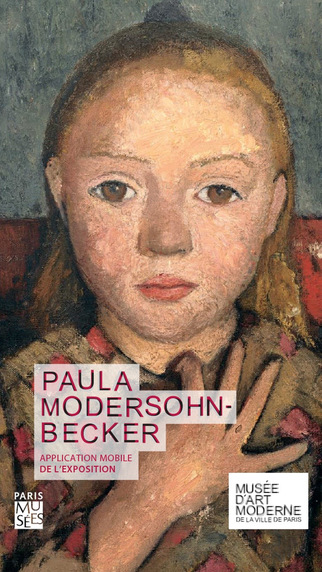
In the Musée d’art moderne de la ville de Paris, the city’s museum of modern art, until August 21st, there is Paula Modersohn-Becker, a German artist from the city of Bremen whose short life spanned 31 years. Born in 1876, she began drawing when she was 16. Sent to the home of an aunt in England to learn how to keep house like a good Hausfrau, she learned to draw instead.

In 1899, she had her first exhibit in Bremen. Confronted by her paintings, some critics, filled with disgust, considered her work impure. There was no reverence, no piety. How could a woman, pure and pious by nature, create in such a way?


Paula Modersohn-Becker, trained to be a teacher, prefers to read and paint. Thanks to a small inheritance from an uncle, she can do just that. With her friend, the sculptor Clara Westhoff, she moves to Worpswede, a small village on the swampy moorland between Bremen and Hamburg.

A group of painters have created an artists’ colony there. Like the members of the Barbizon School in France, they paint in the open air. Living together, working together, they spurn the influences of the city and aspire to the purity that only Nature can provide.

Paula Becker joins them, attracted in particular by the work of Otto Modersohn, who paints the immense skies, the canals, the birches and marshes of Teufelsmoor, the Devil’s Swamp, stretching for miles around Worpswede.


Modersohn is married and has a small daughter, Elsbeth. His wife has tuberculosis, a fatal illness at that time. Four months after her death, Modersohn and Paula Becker are engaged. Her parents are ready to give their consent if their daughter agrees to move for a few months to Berlin to attend cooking school. Her father encourages her to submit to her husband in all things; such are the foundations of a happy home.

Paula, a dutiful daughter, bows to their wishes. The couple marry in 1901, after Paula’s return from from Berlin and her first stay in Paris. There she studied anatomy and discovered Cézanne. Influenced by his desire to reduce nature to its geometric essentials, she sets out to paint her personal vision of the world and people around her.

Between 1901, the year of her marriage, and 1907, that of her death, there are three more trips to Paris. During that period, she produces over 700 paintings and drawings. She learns to cook but she does not submit. She wants recognition and believes she deserves it for her pioneering work as a painter.

Back in Paris, she discovers Gauguin, Monet and Rodin, whom she meets and whose watercolors she particularly admires. Of him she writes to Otto, “Can you imagine what it must be like to be completely indifferent to what others think?”

Otto is a good husband. He encourages his wife to paint and recognizes her exceptional talent, yet he feels the path she is following is wrong. For him, Nature and purity, the holy isolation of Worpswede; for Paula, the city and everything new. In his eyes, the abstraction she is introducing into her painting is little more than crude form.


In 1906, Paula leaves again for Paris and she leaves Otto, desiring an end to their five years of marriage. She does not want a child, she wants to paint. She is thirty years old, she has created a body of work she can be proud of and has much further to go.

During this final stay in the world capital of art at the beginning of the 20th century, Paula Modersohn Becker, along with Picasso and Matisse, is revolutionizing painting, making it more personal and abstract, cubist, expressionist, “fauve” or “wild.”

In 1906, Paula Modersohn-Becker paints the first nude self-portrait by a woman, introducing a completely new perspective on the female nude, the almost exclusive domain of men up to that time. She paints a series of naked nursing mothers with a monumental naturalness never before seen in art.


She also continues to paint portraits and self-portraits. The American art historian Diane Radycki, author of Paula Modersohn-Becker: The First Modern Woman Artist published in 2013, claims that Picasso himself may have seen her portraits and been influenced by one in particular, by a certain turn of the head, which enabled him to finally complete his massive portrait of Gertrude Stein.

There were also hundreds of still lifes. Before Matisse, in one, she included a fish bowl with three goldfish, elements of life, movement and constant chromatic change. The French call the still life “nature morte,” dead nature. Modersohn Becker gave it new life.


Then she changed her mind. She wrote to Otto and asked him to come to Paris. It was a mistake to want their marriage to end. They spend six months in the city together. She becomes pregnant and returns to Worpswede to give birth.

A daughter, Mathilde, is born on November 2, 1907. Labor is difficult and lasts two days. The doctor orders Paula to remain in bed. Eighteen days later, he gives her permission to rise. She takes a few steps, sits down and dies of a pulmonary embolism.

Schade” (what a pity) was her last word.

After a couple of hours with the paintings of Paula Modersohn-Becker, I leave the museum deeply moved, refreshed and more alive.


P.S. For readers who might be wondering about French country living the hard way, by the end of August, I may have a home…