dimanche 26 juin 2016

June, youth and violence


There is debate among etymologists about the origin of the word June. Some say it comes from “junior,” making June the month of youth, a time to celebrate all that is new, fresh, and strong. Showing due respect to its elder, June follows May, the month of “majors,” all those age 21 and above.

Another theory sees the name as a tribute to the goddess Juno, wife of Jupiter and guardian of the Roman Empire. Her birthday was celebrated on June 1st and on that date the Romans honored the warlike traits of this goddess who, with perfect ease, combined youth, fertility, sovereignty and military power.


In France, in early June, farmers keep a careful watch on the sky. Rain on June 8th, the feast day of Saint Médard, patron of farmers and vintners, means a bad harvest will follow.

In June 2016, bad weather, war and youth came to a head in France. June came in like a lion, with weather conditions closer to those of early March. On June 3rd, we Parisians were still wearing winter coats and wool scarves as the Seine rose to critically high levels, threatening the city’s infrastructures and underground transport system.

On June 4th, the waters began to recede, but not before having caused over a billion dollars’ worth of damage throughout France. That day, I joined the crowds along the Seine to gape at the fast-flowing waters lapping the belly of some city bridges and engulfing the riverside walks where French and foreign lovers like to stroll.


The month got off to a bad start and the farmers’ patron saint proved powerless to stop the torrential rains that continue to fall. May 2016 was France’s rainiest month on record since 1873. June is bound to break some records as well.

And as if the rain were not enough, we’ve had transport strikes, gas shortages, protests marches and the European Soccer Championships, marred by bands of Russian and British hooligans streaming through the streets of major French cities. They provide proof that soccer, like war, is politics by other means.

There’ve been garbage strikes as well. Walking among the mountains of trash piled up along a major Parisian boulevard on one of the only warm days we’ve had this month, I realized how clean and efficiently run this city normally is. On a day without a strike, you’d hardly know that garbage exists.


Striking sanitation workers returned to the job just in time to clean up for the Euro, as the international soccer championships are known. Parisian streets were made pristine to welcome soccer fans from all over Europe. Based on some of the behavior I’ve observed above ground and below, I’m not so sure many of them cared.

The day following the June 10th kick-off, I shared a metro car with a crowd of Irish fans. These young men were not hooligans, but they were supporting their team by getting drunk. Frankly, I don’t think they could have told the difference between a mountain of trash and the blarney stone.

That same Saturday night, above ground, in the Pigalle neighborhood home to the Moulin Rouge, Irish fans dressed in green were spilling out of Irish pubs (Paris has quite a few) into the streets, blocking traffic, improvising cheers, songs and line dances. They were a rowdy bunch but, well after midnight, I felt no danger as I milled among the crowds and the alcohol fumes.


What was I doing in Pigalle after midnight? I guess you might call me collateral damage of the soccer championships. Earlier in the evening I’d been on the metro line that stops at Stade de France, the French national stadium, among fans, tourists, and pickpockets.

And guess whose pocket was picked? Not the drunken fan’s, not the innocent tourist’s, but mine, the savvy Parisian who should have known better.

Actually, someone slipped a hand into my purse and got away with my wallet: driver’s license, national identity card, my civil service card stamped “bleu-blanc-rouge,” my debit card, an unsigned check, and a prayer to Santa Rosalia whose grotto I visited with my nephew Louis when we travelled to Palermo during summer 2015.

Santa Rosalia, proteggimi,” protect me. Well, I guess she did. I got my wallet back. A transport worker found it and did some detective work to find my phone number. Once I got the call, I headed back into the metro to a suburban station where my wallet, minus about twenty euros, was waiting for me.


Nature has been unkind to France this past month and fate did me a nasty, though not very serious, turn when it sent that pickpocket’s hand my way. More serious is the violence humans have been doing to each other during this tragically bloody month.

On June 12th, 49 died and 53 were injured in the Orlando attack, making it the deadliest mass shooting in US history. The assailant used an A-15 semiautomatic rifle, readily available in Florida. There may be between 10 to 12 million in circulation in the US—though why anyone outside the military would want or need such a deadly assault weapon simply boggles the mind.

In France, a day later, a couple of policemen, parents of a three-year-old child, were brutally stabbed and murdered in their home.

In each attack, the assailant was a troubled young man with few chances of ever landing a good job, a nobody of sorts, who, after committing his heinous act, pledged allegiance to ISIL. Each young man had previously been under investigation for terrorist activity, but there was not enough evidence against him to warrant arrest.

On June 14th, hundreds of thousands of protesters across France marched to demand the withdrawal of a bill proposing a major overhaul of French labor law. For the most part, marchers were peaceful, but here and there, outbursts of violence reached unprecedented levels.


In Paris, bands of masked, hooded young men used metal bars to break the windows of a children’s hospital. By a deeply sad twist of fate, it was to this hospital that emergency health workers had earlier transported the small child of the murdered policemen.

One of the roles of the goddess Juno is to warn us of the dangers of violence and war. In a month of June marked by natural and human violence, we lowly mortals should heed her warning and not give in to hate or despair.


dimanche 29 mai 2016

The grandeur that was Rome, the glory that was Pottsville!


In my apartment in Paris, on a shelf reserved for my most precious books, I have a copy of Pottsville’s Sesquicentennial Celebration Souvenir Program from 1956. The booklet, held together with yellowing tape, celebrates “150 years of progress.” I remember the event. Some readers may as well.

My childhood memories are of my father’s beard, grown specially for the occasion, and of a sesquicentennial beer glass that gave its bearer access to unlimited beer. I also remember ladies wearing bonnets and ankle-length full skirts. We children were proud to display commemorative buttons pinned to our polo shirts.

In the souvenir program, I can find photos of men who, just like my father, sport an old-fashioned beard. They also wear a string tie that looks a lot like the one worn by Gary Cooper in the 1952 western “High Noon.”


There are other photos: downtown Pottsville in 1956 at a time when not a single storefront was empty, Garfield Square, Tumbling Run, and the world’s largest anthracite breaker, the Saint Nicholas, belonging at that time to the Reading Anthracite Company. I like to look at the photos but I treasure the booklet for the words it contains in an essay entitled “Pottsville’s Picturesque Past.”

Overflowing with facts, style and humor, the essay was written by Edith Patterson, born in 1878, who served as head librarian of the Pottsville Free Public Library from 1918 to 1950. My Aunt Jean worked for her back in the late 1940’s and I think Miss Patterson was one of the persons she loved best.

In her short but succinct history, Miss Patterson dares an audacious comparison between the founding of Pottsville and that of Rome, both spread out across seven hills. To silence any protests against the pairing of the two cities, she immediately follows with a quote by a respected 19th century Pennsylvania historian:

“For anyone from Cape Cod to New Orleans, to say he had not heard of the renowned town of Pottsville would sound as marvelous as if an Arabian were to declare he had never heard of Mahomet.”

Writing in 1844 about the anthracite “coal rush” of the 1820’s, I. Daniel Rupp, a prolific writer and translator whose histories of many Pennsylvania counties are available on-line, goes on to describe the Buckley Basin, Pottsville’s canal port, once located where Claude A. Lord Boulevard intersects Norwegian Street:

“From this port…, there is a fleet of more than four hundred vessels—a fleet more formidable than that which bore the Greeks to the Trojan War…”

Back in those days, Pottsville was quite a place and could certainly bear comparison to the “grandeur that was Rome.” The city was the gateway to the “anthracite region,” whose coal fired America’s industrial revolution and made the nation great.


Then, a few years later, after World War I when anthracite production peaked, the US fuel market began to change. In the Kingdom of Coal, decline set in, just as in ancient Rome.

Of course, history is not so simple yet, having just returned from a trip to Rome, I can’t help feeling that somehow Miss Patterson got it right. Rome does remind me of Pottsville and, while exploring the Eternal City, I often find myself thinking about “home.”

It has something to do with so much of history happening underground.

When my mother was still alive and had a house on Third Avenue, we sat atop history: the Mammoth Vein, right beneath our house, the richest vein of anthracite in the world, tortured, twisted, impossible to extract. In the 19th century, miners lost their lives trying and entrepreneurs hoping to hit the jackpot went bust.

I used to think about the Mammoth Vein a lot, standing on our back porch, looking north, able to see the co-gens on Broad Mountain and the giant strip mine near Wadesville.


In Rome, I went underground to explore the history of Christianity. Walking along the Appian Way (and alive to tell the tale—the more than 2000 year-old cobble-stone road remains a major highway where Roman motorists travel at top speed, hell-bent on picking off a pedestrian or two), I made my way to the catacombs of the martyred saints Callixtus and Sebastian.


In these vast underground burial grounds that today belong to the Vatican, Rome’s first Christians met to worship in secret at a time when belief in Christ was punishable by death. In earlier times, these same underground galleries were part of mines and quarries that supplied the volcanic stone used to construct the public buildings of Rome.

When the mines were transformed into catacombs, “berths” were carved into the soft reddish-brown stone, each one long and high enough to contain a body. On the walls, in the dark passageways, Christian iconography began to take form: the fish as a symbol of the Eucharist, the dove as the Holy Spirit, the anchor as a symbol of hope. Carved into the rock, painted on the walls, many are still visible today.


Above ground, nothing betrays the presence of these underground cities. Yet all of Rome is like that. No matter where you walk, you can be sure that beneath your feet there are layers of history, just like in and around Pottsville, I might add, taking my mother’s house as an example.


In Rome, the past also has a tendency to “pop up.” Ancient Roman columns or tablets with Latin inscriptions are as natural a part of Roman parks and gardens as a flower bed or a shade tree in the USA.

But in and around Pottsville, the past pops up as well, a past so ancient that it defies the mind.

At the Yorkville end of Sharp Mountain, the sector I know best, I’ve often admired enormous outcrops of Pottsville conglomerate, sandstone, quartz, and shale pressed together 300 million years ago during the Pennsylvania period of geologic time. Around Pottsville, I’ve searched for the fossils of trilobites and tropical plants, local inscriptions of a far-distant past.

In the end, Miss Patterson’s comparison may not be as unlikely as it first seemed. True, no other city in the world can boast the concentration of beauty and splendor of Rome, but Pottsville too has a glorious past, inscribed on the earth’s surface and underground.

Very solemnly, then, let’s raise an ice-cold glass of Yuengling lager to the grandeur that was Rome and the past glory of Pottsville.


dimanche 24 avril 2016

More French Country Living (and it ain’t easy!)


Today is Sunday and I’ve decided to make it a true day of rest: my favorite breakfast, fried eggs with a big round Lebanese flatbread sprinkled with za’atar, washed down with a cup of strong black coffee.

The flatbread, a za’atar manoushe, I buy at my outdoor market, prepared fresh for me by a Lebanese chef from the Beqaa Valley who has settled in France. He flips and throws his dough just like a pizzaiolo and then bakes it on what looks like an upside-down wok.

While it bakes, he brushes on some olive oil and then sprinkles the bread with a handful of za’atar, the Arabic word for thyme—though thyme is simply the base for an addictive mix of herbs and spices that includes, though is not limited to, sumac, sesame seeds, mint, oregano and hyssop.

Only on those days when I have the time to offer myself a real treat do I walk up the hill to the market to buy myself a warm za’atar manoushe, time to cook, to linger over breakfast, to let the minutes and hours pass without worrying about what to do next.

Today is one of those days, finally, because for weeks I’ve been spending Sundays at my house in the country, participating for the first time in years in the slow, luxuriant emergence of spring.

I’ve seen snowdrops come and go, watched the first primroses emerge and daffodils open to the sun. Hyacinths scent the air, violets peep out from among blades of new grass, and creeping myrtle (what the English call “periwinkle”) is climbing up the sides of the wood shed in my garden, its purple flowers nodding in the breeze, in approval perhaps of my industriousness…


Because I’m not in the country to admire nature. I am here to work. I have quotas to meet, long days where I hardly raise my head or take time to eat or drink. As for breaks to use the bathroom, well, my house doesn’t have one yet.

What am I doing? I’m working with hammer and chisel, I’m hammering and chiseling, scraping and tapping, cleaning one by one, with the utmost care, the terra cotta tiles that originally covered the floor in my living room.

In February, they were pulled up so a new cement slab could be poured to replace a clay and straw floor where any step could be your last. In the cider cellar below, the rotting supports, thick tree trunks complete with burls and knots, were replaced by steel beams—and no time too soon. The wood had turned to dust and that was what was holding up the house.

Now I am proud of my cellar! I would actually invite guests to climb down the steep stone steps and penetrate the darkness (no light in there yet), no longer afraid that a chunk of wood or a clump of earth might fall and hit them on the head. Nor do I worry they will return to the light enshrouded in cobwebs. My cellar is respectable now, a true storage space for cider or pretty much anything else.

But let’s get back to those tiles, beautiful marbled tiles, as old as the house itself. They are typical of the Perche region, a true collector’s item, sought after by homeowners striving for the authentic French touch as they decorate their country homes with a budget at least double my own—those tiles, my contractor was ready to get rid of them.

In my first act of womanly defiance, I stood up to him and said NON.

He said to me, Bah, qui va les nettoyer? Well, who’s going to clean them?

My answer to him was “Moi.”


These vintage tiles dating back to 1850 measure 20 cm by 20 cm, and it takes 25 to make one square meter. My living room floor has a surface of 25m². Do the math—that’s a whole lot of tiles, tiles that had not been disturbed in well over 150 years. When they were taken up, the earth came up with them, red clay, straw, rubble and mold, caked to the bottom of each one.

Sometimes it’s just a thin layer I can scrape off; sometimes, the caked matter, pretty much petrified, is two or three inches thick. I hammer against the blunt end of the chisel, hitting hard for the first few strikes. Then, in order to avoid breaking the tile, I have to tap gently, dozens, sometimes hundreds of times, before I can remove the dirt.


And the edges must be perfectly smooth, each and every one of them. Otherwise, the tiles cannot be re-laid. Chiseling, scraping, I feel like a sculptor working with loving care on what will finally become my “masterpiece.”

Monsieur Béatrix, my contractor, approves of my work. I would even say he is impressed and since I set to work cleaning the tiles, our relationship has changed. I too am on the job, and when he and his assistant “Papy,” a man who looks like a retired prizefighter, no longer hear the constant tap-tap-tap of my hammer, they come out to check on me in the garden where I’ve set up shop.


The only problem is I’m slow. On a good day, I can do about fifty tiles. That may sound like a lot, but it’s not. That’s 2 square meters and I’ve just hit the 10m² mark. There’s also the sticky problem of broken tiles. Once I’ve removed the dirt and then cleaned the unbroken ones with linseed oil, I’ll have to find a few more square meters of these beautiful—and expensive—vintage tiles.

For the moment, by necessity, I’m taking things one step at a time. As long as all the tiles aren’t cleaned, there’s no use in going out to look for more. Once the cleaning’s done, I’ll take inventory to determine exactly how many more I need.

But today, on the seventh day, I’m resting, in good company. Patient and determined, I know I’ll make it through the more than 600 tiles.

As for now, I have a new cement slab and a retiled roof with two new windows. Inside the house, clean new walls are going up. Who knows, in a couple of months, I may actually have a home, and Readers, when that happens, you’ll be the first to know.

dimanche 27 mars 2016

An Easter story of urban and spiritual renewal


This is an Easter story, a tale of rebirth and resurrection, of a city and a neighborhood and within that neighborhood, of men’s and women’s lives. The city is Saint-Denis, a place I know well. I’ve worked there since 1991 and I’ve seen many changes, most for the better, some for the worse.

The neighborhood is called “la Plaine,” the plain, and in that neighborhood, there is one particular street, “rue de Landy,” that has been travelled for well over one thousand years.

In the beginning it was a footpath across marshes and fields of grain. La Plaine was the breadbasket of Paris. Almost parallel to the path ran the “King’s Highway,” the royal way which joined the monarch’s palace in Paris to the burial ground of French kings at the basilica of Saint Denis.


In the Middle Ages, each June, the path could not contain the flood of pilgrims, merchants and students crowding la Plaine to attend the annual “Lendit Fair,” one of the biggest in Europe at that time.

The occasion was a yearly exposition of a Holy Nail and a remnant of the Crown of Thorns preserved within the basilica of Saint Denis. That done, the bishop of Paris declared the fair open and the crowds got busy buying, selling and having a wild and raucous time.

By the late 19th century, “Lendit” had become “Landy,” the name of a bustling street, the main drag of France’s industrial revolution. The street was lined with factories, and nearby stood the Landy Gasworks, a vast storage and production facility providing the city of Paris with gas produced from coal.

The neighborhood was also home to steel plants and automobile manufacturers, to factories producing everything from toothpaste to the finest French crystal.


A century later, it was all over. By the 1980’s, “rue de Landy” had earned the sad reputation of being at the heart of France’s rustbelt in a neighborhood scarred by poverty.

I remember rue de Landy when I first started working in the town of Saint-Denis in 1991. There were many two-storey buildings with balconies running along the front and many doors opening onto the balconies, which made them look like very rundown motels. I watched mostly men coming and going from these flimsy buildings, immigrants like me at the time, except that I was much better off.


Some of these buildings did not have running water and I saw women carrying jerricans they filled at pumps in the street or at fountains in courtyards where there were rows of ground-floor toilets to make up for the lack of indoor plumbing in the one-room apartments entire families shared.

Today, except for a few pockets of rundown buildings destined for demolition, all of that has disappeared and rue de Landy is once again a main drag, this time at the heart of the second most important business park in the Paris region.

The resurrection began in the 1990’s with the construction of France’s national stadium, Stade de France. In the following years more than 20,000 new jobs and 5,000 new housing units were created in la Plaine.


In 2012, to meet the spiritual needs of the inhabitants and the more than 325,000 commuters who travel in and out of the area every day, the first stone of a new church was laid. In France, a country where it is more common for churches to be deconsecrated or torn down, this was an event.

Less than two years later, occupying a relatively small lot at a corner of rue de Landy, “Saint Paul de la Plaine” opened its doors. It is one of the most surprising and powerful symbols of rebirth the neighborhood has known. Designed by the French architects Patrick Berger and Jacques Anziutti, the church is a horizontal figure eight, symbol of eternity.


Seen from the street, it looks like a stout cylinder wrapped in bands of polished aluminum. There is no bell tower, no steeple, no cross rising high into the sky. Instead, a small but prominent stone cross emerges from the highest band of aluminum, not directly above, but slightly to the right of the entrance to the sanctuary, located within the biggest loop of the figure eight.


The inside of the sanctuary is bare, but it is not austere. The walls are white and lit from above by twelve small rectangular windows, placed just below the ceiling, shaped to resemble a drop of water suspended above worshipers’ heads. The altar, an unadorned block of Burgundy stone, sits in front of a wall of plain glass panels that mark the passage between inside and outside, between contemplation and the active life of the business park.


During mass, worshipers see busses and pedestrians hurry by outside. People in the street can see worshipers make their way to the altar to take communion. All can see the point where the two loops cross to create an eight. The smaller of the two is a free-standing aluminum and steel loop enclosing a garden.


With a tree growing at its center, the garden could symbolize paradise. It could also symbolize rebirth. As night falls, the tree is lit by colored spotlights, green or magenta, that reflect against a curved aluminum wall marking the garden’s edge. Spring has not yet settled in. The tree is bare, a reminder of the Cross, yet it is alive with the sap of new life.


Saint Paul considered himself the 13th apostle, invested with the mission of evangelizing the world. At Saint Paul de la Plaine, the twelve apostles, symbolized by the twelve points of light below the roof, “hold up” the Church. Saint Paul’s symbol is the transparent panes of glass behind the altar, an opening to the world and to the more than 75 nationalities inhabiting la Plaine-Saint Denis.

This small church, composed of a sanctuary large enough for 200 persons and a glass-walled community center next door, visible from rue de Landy, welcomes all passersby, from all walks of life. Like Saint Paul, it opens itself to the world, as a place of rest, an offering of hospitality, and an invitation to eternity.

It is a fitting symbol of the renewal of rue de Landy. It is also a fitting symbol of the rebirth of Easter, and I wish my readers a Happy Easter Day.


dimanche 28 février 2016

Day tripping, the European Way


Sometimes I like to walk out my front door, into the street, and onto a train heading to an unknown destination. For someone like me, who does not own a car and cannot simply step on the gas and go, it’s a way to disconnect from daily life and immerse myself in the unknown.

To aid me in this venture, I can count on the SNCF, the Société nationale des chemins de fer français, the French national rail service. A pop-up appears on my computer screen, a flash sale demanding immediate attention: act now or pass up an incredible deal. I click, study a list of destinations, choose somewhere I’ve never been before, and buy.

Then, uplifted by my recent purchase, I return to the everyday drudgery of life in front of a screen, secure in the knowledge that not too far down the line new horizons are awaiting me.

Only a week ago, I got up early on a dark, damp Saturday morning and headed to Gare du Nord, the Parisian train station to all points north, the biggest train station in Europe and the second biggest in the world.

Inside the station, it was a very dreary scene. The homeless, slumped against walls and in dark corners, were just beginning to stir. The station’s mice were active too, exploring overflowing trash bags that clean-up crews had not yet removed. I joined a line of early-morning travelers about to undergo a security check. That done, I climbed on the train to Amsterdam.

But that’s not where I was going. Before reaching its final destination, it would make a stop in Antwerp, Belgium, and that’s where I was getting off.

My primary motivation was ignorance—my own—and a desire to put an end to it. I knew a little about Antwerp. I knew it was a place for buying and selling diamonds. I knew too that the painters Rubens and Van Dyck had lived there in the 17th century during the city’s golden age. I knew it was an important port and that the city’s inhabitants spoke Flemish. Upon arrival, I didn’t know much else.

Inside the station, a magnificent building inaugurated in 1905, I asked for a map and headed outside. In the distance towered a lacy steeple. It belonged to Our Lady of Antwerp, the city’s cathedral whose threshold I would cross later that day.


I chose the steeple as my guide toward the city center, but then I got sidetracked. That’s the kind of traveler I am, a bad companion for those who like to stick to a program of things to do and see. I like to wander, get lost, and end up where I had no intention of going in the first place.


That’s exactly what happened to me in Antwerp, a wrong turn that turned out to be a stroke of luck because I ended up on Vrijdagmarkt, Friday Market. At one corner of that square stands the Plantin-Moretus Museum, home to one of the world’s first industrial printing houses and two of the oldest printing presses in existence today. I said to myself, this is something to see, and went inside.

Until the late 19th century, the museum was also the family home and the workplace of descendents of Christophe Plantin, founder in 1576 of the Gulden Passer, The Golden Compass Printing House. Until its closing in 1876, when it was turned over to the Belgian state as a museum, the Plantin-Moretus family lived and worked in the large but compact building where, for their workers and themselves, nights were short and days were long.

Once inside, visitors can pass directly from the family’s formal dining room whose walls are lined with family portraits, some painted by Rubens and Van Dyck, into the proof-reading rooms, offices, studies, a 17th century bookshop, and a print shop with seven presses that could produce 1,250 pages during a standard 14-hour workday. There are also ten tons of handmade moveable lead type, produced on the premises in the family’s foundry, and on one of the upper floors, the family library, which includes 638 rare manuscripts.


I’ll admit I’d never been to a place like this before. Though it calls itself a museum, the Plantin-Moretus Prentenkabinet feels a lot more like a workplace where everyone has just stepped out for lunch and at any moment, they’ll be back: Proofreaders seated at tables flooded with natural light, pouring over galleys straight off the press; compositors in the print shop setting the page, preparing it to be inked and “pressed” onto paper, very physical labor that requires flexibility and a good strong back.


In the study, its walls lined with fine Spanish leather, the 17th Humanist Justus Lipsius may be at work, in the space the family has provided for him to study, write and consult the thousands of works in the family library. His own complete works will be printed by Jan Moretus, the son-in-law of Christophe Plantin. And surely customers are standing at the counter in the bookshop, hoping to finger some of the leather-bound books produced at the Gulden Passer.


On this damp February day, there are few visitors and the museum is silent. Yet the air is alive with potential, as if the accumulation of centuries of love and care for the printed word could suddenly set the entire place ablaze with its former bustling activity.

Christophe Plantin had a motto: Labore et Constantia, by work and perseverance. For three centuries, for the Plantin-Moretus family, work and perseverance were enough. But in the mid-19th century, they refused to modernize: no rotary press, no photogravure, no linotype. The Gulden Passer remained frozen in time and progress passed it by.

In part, that is why the museum seems so alive today. Concentrating on their work, the printers missed out on a revolution. They may have loved their craft too well to care or to change.

After my visit to the Plantin-Moretus Museum, my time in Antwerp was almost up. I ran through the city, absorbing the sights at high speed, and didn’t even have time for some of those famous Belgian fries served with a dollop of mayonnaise.

Back on the train, I gazed at the night and felt a little less ignorant than at the start of my day. Then I dozed and dreamt, carried back to the time when the rush and clatter of the presses of The Pottsville Republican could still be heard on Mahantongo Street.

dimanche 31 janvier 2016

A new house in France that’s a bit like home


While on Saturday, January 23rd, two feet of snow was falling on Schuylkill County and most county residents were staying inside, on other side of the Atlantic, I was out and about in the damp and cold, hours before dawn broke over France.

It was a big day for me. In fact, I’ve had a lot of big days recently and I’ve chosen this Sunday to let readers in on some news: in October, I bought myself a country home.

Some of you may have read Peter Mayle’s A Year in Provence, a book which has spawned an entire industry about ex-pats wrestling with the locals in villages all over France, trying to fit in, trying to find a good plumber, trying to penetrate the minds of the inscrutable French.

I don’t qualify as an ex-pat. I’ve been here too long (I’ll be celebrating my 30th anniversary of French life in a year), I work for the French government (can you get more “inside” than that?), and I’ve become one of them, as I now have both French and American nationalities (my first impulse remains to say I’m American though after all these years, my identity floats somewhere over the Atlantic, torn between two continents).

Nor are the French a mystery to me: I live with them, I work with them. Why, some of my dearest friends in the world are French! And so far so good when it comes to finding a plumber, which brings me back to the subject of my house.

It all started last summer. Paris was caught in a heat wave, and my small apartment was hot and oppressive. If I opened all the windows, it was like living in the middle of a freeway. If I closed them, it was too stuffy to breathe. My nearby park, Buttes Chaumont, beckoned but I was chained to my computer, working under a deadline to finish several translations for a company marketing funeral services.

I worked with the blinds down and the curtains drawn to keep out the sun and heat. The atmosphere was dark and dreary, the air, hard to breathe—a little big like being buried alive.

To escape from preneed contracts and funeral fashions, at the end of each work day, I got into the habit of exploring real estate listings on line, dreaming about homes deep in the French countryside or along the sea. I insist on the word “dreaming” because, as I dreamed, I had no intention to buy.

Then it happened. While I was “visiting la Côte opale,” a long stretch of beach in northern France extending to the Belgium border, a pop-up appeared on my screen. It had nothing to do with the North Sea or the English Channel, the
area of my "visit." It was inland and in a completely different part of the country, a corner of France I did not know.

I read the listing, I looked at the photo gallery, I looked at the price. I also noticed a message saying the owner would be at the house, generally uninhabited, till the end of the week. On a whim, I called the number on the screen.

Two days later I was in a train heading west towards the lowest point of Basse Normandie, lower Normandy. First we crossed the suburbs of Paris, then we arrived in the city of Chartres, whose beautiful cathedral dominated the skyline as we crossed the Beauce, a vast plateau, for centuries the breadbasket of France.

I am a Pottsville girl. I do not feel at home on the plain. I need mountains, valleys, rolling hills and hollows, Pennsylvania, in other words. I was dismayed by what I was seeing from my seat. If the house was in one of these villages plopped down in the middle of the plain, there was no chance I would go for it.

The train kept chugging towards its destination (it was a local, stopping at every town and village, not a high speed TGV) when suddenly everything changed: rolling hills, forests, valleys, summer fields of green, villages nestled in hollows, something that looked like home to me.

I got off the train at the village of Condé sur Huisne (now try to pronounce that one!), with a population of 1,343, a village church on the main square, a post office, two bakeries, a pharmacy, a café, a small supermarket, and two restaurants. I walked from the train to the house, right off the main square. The front door was open. I walked inside. I was charmed.


When I got back on the train in the late afternoon, I had already been to the notary’s office with the owner and her daughter. The papers for the sale were drawn up. The next step would be for me to sign a “promise to buy” and return it to the notary with a binder. That was in late July. By the end of October, the home was mine.

You may be asking, so what is it like, this new house of yours?

To begin, let’s say it has a lot of potential, a way of saying it needs a lot of work. The house was built around 1850. The walls are thick, some are crumbling, and the red-tile roof must be replaced. In the living room, which has a big fireplace, the floor is covered with beautiful terra-cotta tiles of the kind traditional to the region, and these are originals. There’s one small problem, though. Beneath them, the beams are rotting and, if I don’t have them replaced, the floor will collapse. And that’s just the beginning…


But I repeat, this house has potential. Everyone who has visited tells me so. Out back there’s about 3,000 ft² of garden, and that garden has a cherry, a hazelnut and a boxwood tree over one hundred years old. Next door, there are open fields where horses graze, in the distance, wooded hills, and at the edge of the village, a river called the Huisne.

Yesterday, a contractor who has done work for me in Paris met me at the house. That’s why I was out before dawn, to catch the first train of the day. I’m hoping he will transform the inside of my house, as he has transformed my apartment in Paris. Work on the roof begins next week. A local contractor will be doing the job. Perhaps by summer, I’ll have a home.

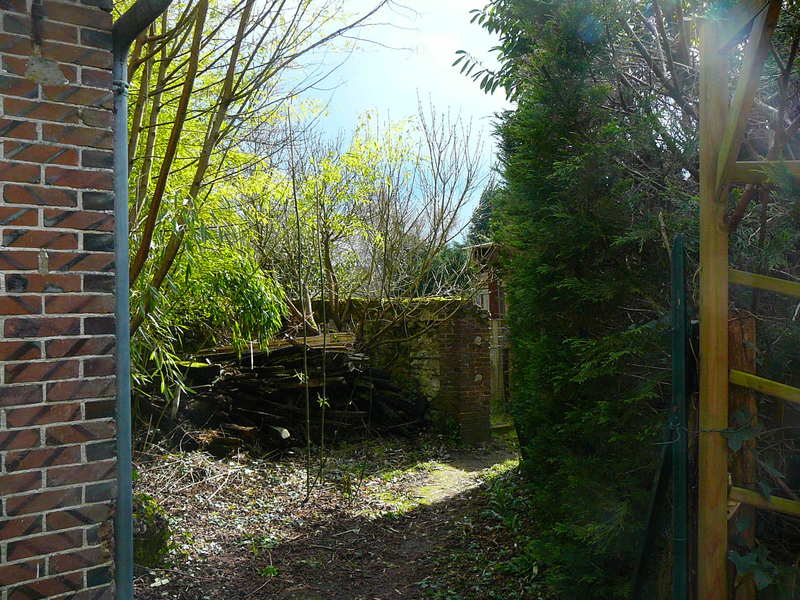
Dear readers, I think you’ll be hearing more about this. Today, I show you some photos of “before” work begins. I’ll keep you posted as things progress, and as we discover together a beautiful region of France called “le Perche.”

dimanche 27 décembre 2015

"High tech" then and now: Julia Margaret Cameron and the art of photography


Christmas is over, the gifts have been opened, the wrapping paper thrown in the trash. I’m ready to bet that some readers got a new tablet or pad, a new smartphone or some other electronic device. If Santa was feeling less generous, or if you were not so very good, you may have only received a selfie stick or a case for your cell phone.

For those readers who spent Christmas day surrounded by grandchildren, I invite you to think back to Christmas fifty years ago. That year too, there was a “high-tech” gift on many wish lists. We were hoping for a Polaroid Swinger, an instant camera that squeezed out, in a minute flat, the photo we just snapped.

I was one of the lucky ones, I found a Swinger under the Christmas tree that year, and my sisters and I spent our Christmas day snapping our recently acquired poodle, the first dog we’d ever had.

The photos were small, bad and fascinating. Sometimes they were streaky, sometimes sprinkled with white spots, or only partially developed, leaving half the photo blank, looking as if it had been ripped in two. Also, there was that distinctive chemical smell and often, if we were too hasty in handling our photo, we left the smudge of our fingertips.

My father had a small motion-picture camera, we also had a Kodak Brownie, but the camera my sisters and I loved best was the Swinger because using it, we felt in control and got instant results.


As I write, if I turn my head, I see a group of adolescents in the street below. They’re taking group selfies. No sooner is the photo snapped, they crowd together to see the result. I’m not sure they’d have the patience to wait the minute it used to take for the Swinger to place a finished photo in our hands.

Fifty years ago, we “met” the Swinger (some of you may remember the ad with Ali McGraw and the $19.95 price tag). If we go back one hundred years more, we arrive at a period when photography was an extremely demanding craft and an emerging art form.

In early December, while in England to visit a friend, this was brought home to me in an “electrifying and delightful way” (to use the words of the photographer whose work I went to see) at an exhibit at London’s Victoria & Albert Museum, the British museum of art and design. The photographer is Julia Margaret Cameron (1815-1879), one of the 19th century’s greatest and among the first to understand that photography is art.


Julia Margaret Cameron, who was born in Calcutta, was introduced to the very new process of photography in 1842 by the English astronomer Sir John Herschel when they met in South Africa, where Herschel was surveying the skies of the Southern Hemisphere. Cameron became interested in the process and followed its developments, but it was not until 1863 that she received her first camera.

Two years later, this extraordinary woman, whose enthusiasm for photography was equaled only by the confidence she placed in herself and her art, had her first “one-woman” show in the South Kensington Museum, later renamed the Victoria & Albert. In 1868, the museum’s director assigned her two rooms to use as a portrait studio, making her the museum’s first “artist-in-residence.”

Cameron photographed many of the greats of her day, her friend the astronomer Herschel, Charles Darwin, and the poet Alfred Lord Tennyson, her neighbor on the Isle of Wight, where she and her husband settled upon their return from India.


On that island off the south coast of England, Cameron began her first experiments, taking pictures of her famous neighbor, but also of island children, her family and her maids.


From the start, Cameron conceived of her work as art and sought to “combine the real and the Ideal.” She did not document events, as did her American contemporary Mathew Brady. On the other side of the Atlantic, he was revolutionizing photography in his way as he created the profession of photojournalist through his documentation of the bloody reality of the Civil War.


Cameron preferred historical, allegorical or biblical scenes. She composed her photographs as if they were paintings. In fact, her series of portraits of Virgin and Child are inspired by the Renaissance masterpieces of Raphael. Her photographs also illustrated some of Tennyson’s narrative poems, such as his retelling of the tale of King Arthur.


Yet, Cameron’s particular genius does not concern what she chose to photograph. Her innovations were technical and in her day, she was criticized for her unconventional techniques. In one article, I could never do them justice nor would I know how to explain them well. However, to give readers an idea of what it meant to take a photo in those days, I include this link: http://www.pbs.org/wgbh/amex/eastman/sfeature/wetplate_step1.html

On this PBS site, you can learn the eight steps of the collodion process of photography that used wet glass plates the same size as the final print. Cameron’s photographs are quite large, meaning she used fragile glass plates of the same size, coating them with several substances before finally producing a photograph. To arrive at a final print, patience, knowledge of chemistry, and some luck were involved.

Often, the final result contained “flaws.” Cameron’s genius was to recognize them as art. The substances coating the plate often turned into swirls or smears in the print. Scratches might also appear; there could even be the smudge of a fingertip. For Cameron, they were part of the process and an ingredient of her art.


In the end, each of her photos was a “hand-made” object, a print containing the imprint of the artist’s unique personality.


Pottsville photographer George Bretz used the same process as Cameron when in 1884, he was hired by the Smithsonian Institute to document the Kohinoor Mine at the Shenandoah Colliery. His were the first photo shoots underground and his photos, the first of the underground workings of a mine, opening a new era in mine photography.


How many of us today would have the patience to work like Cameron or Bretz? Their techniques belong to the past; their patience may as well—something to think about in 2016.

On that note, I wish all my readers a happy, healthy new year. I look forward to “meeting” you again in 2016 for our seventh year together.